That is why pick-and-place automation is a common first project. Pick-and-place robots and cobots are related but distinct tools. The right one depends on speed, payload, product variation, workspace, safety requirements, and whether people will work beside it.
This guide defines both, explains how a system works, compares industrial robots with cobots, covers cost, and shows where fixed cells connect with mobile intralogistics.
Key Takeaways
- A pick-and-place system is a full workflow: motion, sensing, tooling, controls, part presentation, and safety.
- Industrial robots suit fast, high-volume, stable processes; cobots suit flexible, lower-volume, or shared spaces.
- Vision, gripper choice, and part presentation often decide success more than the arm does.
- Budget for integration, safety validation, training, and maintenance, not just the robot.
What Are Pick-and-Place Robots and Cobots?
Pick-and-Place Robot Definition
A pick-and-place robot detects or receives an object, grips it, transfers it, and releases it at a target location. Related terms include robotic picking, robotic handling, and automated material transfer. The arm is only one part of the system.
Collaborative Robots Versus Conventional Pick-and-Place Robots
A cobot is a collaborative robot arm built with force, motion, and safety features meant to support work near people. Collaboration is a property of the application, not the robot alone, according to A3's R15.06 update. A risk assessment still decides what is safe.
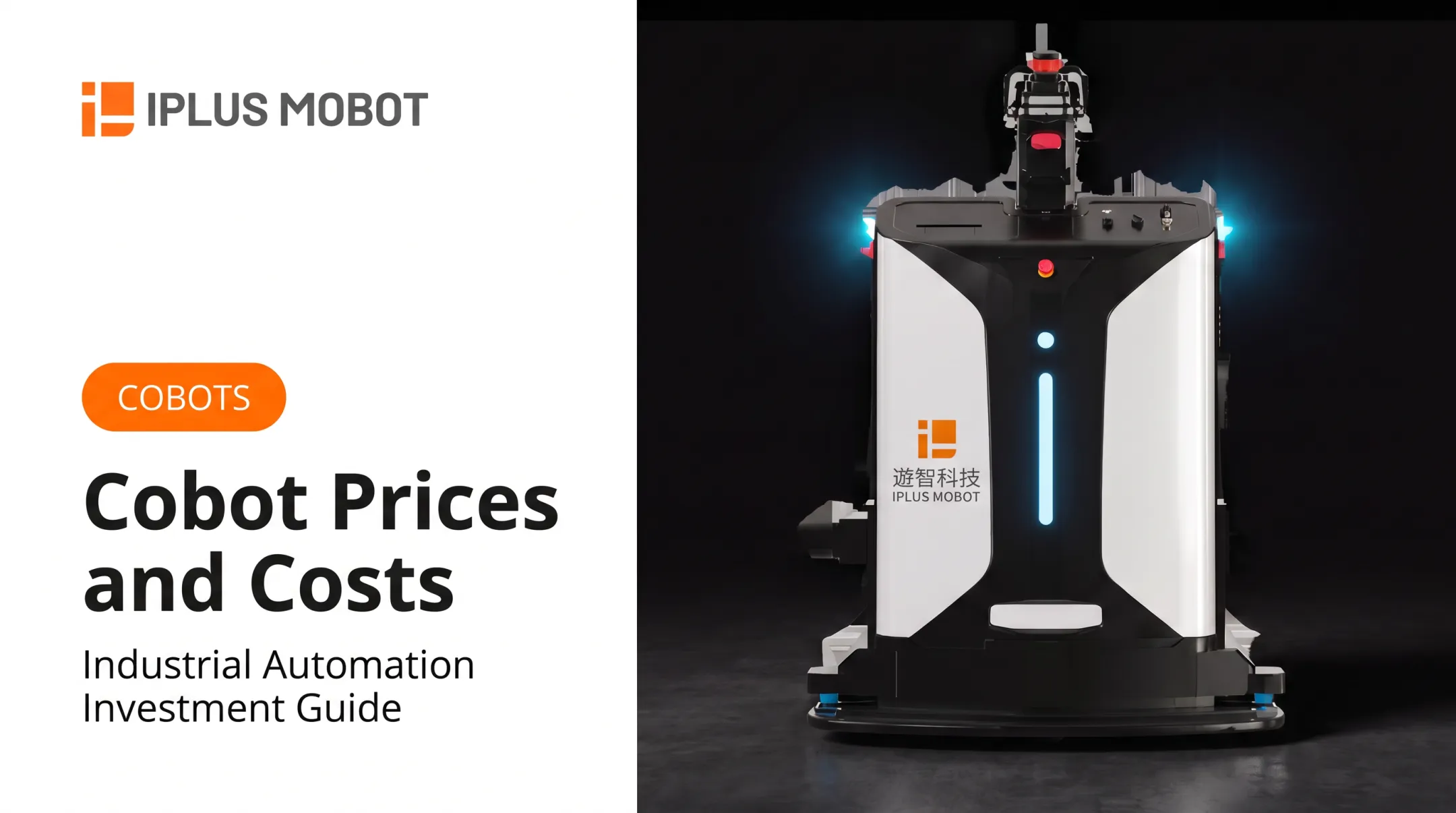
A cobot AMR adds collaborative functions to a mobile base. IPLUSMOBOT's NERA-A, for example, pairs a mobile platform with a 12 kg arm for wafer carrier handling.
Fixed, Mobile, and Hybrid Configurations
- Fixed arms: conveyor picking, machine tending, packaging, palletizing.
- AMRs: carry parts, racks, and pallets through a facility.
- Hybrid: a fixed cell handles manipulation while an AMR moves material between cells.
Strengths and Limits
Benefits include:
- Repeatability and consistent handling
- Less exposure to repetitive or hazardous tasks
- Easy reprogramming
- Continuous operation
Limits include:
- Variable part presentation
- Difficult surfaces
- Integration complexity and changeover effort
- Need for human oversight
Who Should Consider It?
Good candidates include:
- Automotive and EV component plants
- Electronics and PCBA makers
- Warehouses and 3PLs
- Packaging lines
- System integrators
Volume, labor availability, product mix, and process stability decide fit. A stable process with a hard-to-fill role is the strongest case.
How Do Pick-and-Place Robots and Cobots Work?
The Pick-and-Place Workflow
- Present the part via conveyor, feeder, tray, or bin.
- Detect and localize it with sensors or vision.
- Plan the motion path to the pick and place points.
- Grip the part with the end effector.
- Transfer it to the destination.
- Place it and verify the result.
- Release and repeat.

Vision-guided setups add calibration steps. Cognex documentation covers hand-eye calibration, trained pick and place poses, and runtime alignment.
Core Components
- Robot mechanism and controller
- End effector
- Vision or sensing
- Conveyor, feeder, and fixtures
- Safety devices
- PLC or industrial network
- Operator interface
A weak link anywhere, such as poor lighting or an unstable feeder, drags down the whole cell.
Choosing Between 2D, 2.5D, and 3D Vision
- 2D: flat, consistently oriented parts.
- 2.5D: parts with some height variation.
- 3D: stacked, tilted, overlapping, or random parts.
Cognex notes that 2.5D may suffice in some bin-picking scenes while others need full 3D. Test your actual scene before deciding.
Selecting the Right End Effector
- Vacuum: smooth, non-porous parts; bellows cups suit fragile items.
- Parallel or adaptive fingers: defined shapes, or soft handling. OnRobot's soft gripper, for example, is rated to 2.2 kg depending on the part.
- Magnetic: ferromagnetic parts such as sheet metal.
- Custom tooling: unusual shapes.
Don't pick a gripper before testing real parts. Surface texture, porosity, and damp or damaged packaging cause surprises.
Controls, Software, and Integration
These pieces have to work together with your MES, WMS, or ERP:
- Programming and vision-to-robot communication
- Conveyor tracking and safety controls
- Production monitoring and data handoff
When AMRs shuttle material between stations, fleet software handles task assignment and traffic. IPLUSMOBOT's CLOUDIA, for instance, covers scheduling and traffic control across multiple robots.
Common Robot Types and Pick-and-Place Applications
Robot Configurations for Different Tasks
Manufacturer figures below are examples, not class-wide ranges.
| Type | Example | Best when |
|---|---|---|
| Cartesian | IAI CRS-XBA: 1 kg, 2.07 s cycle | Linear, defined workspace |
| SCARA | Epson LS6-B: 0.39 s cycle, ±0.02 mm | Fast, precise small parts |
| Delta | KUKA KR 3 D1200: up to 6 kg, under 0.32 s | Very high-speed light picking |
| Articulated cobot | FANUC CRX-10iA/L: 10 kg, 1,418 mm reach | Flexible reach, shared space |
| Mobile manipulator | Arm on autonomous base | Tasks across multiple stations |

Manufacturing and Logistics Applications
- PCBA: Melecs EWS reports a UR5 packing about 2 million components a year without errors.
- Case repacking: RMR Solutions reports daily throughput rising from about 2,500 to roughly 3,700 cases after a FANUC CRX deployment.
- Machine tending: APT Manufacturing reports 1.5 minutes saved per part.
- Bin and piece picking: Usually requires 3D vision to handle disordered parts.
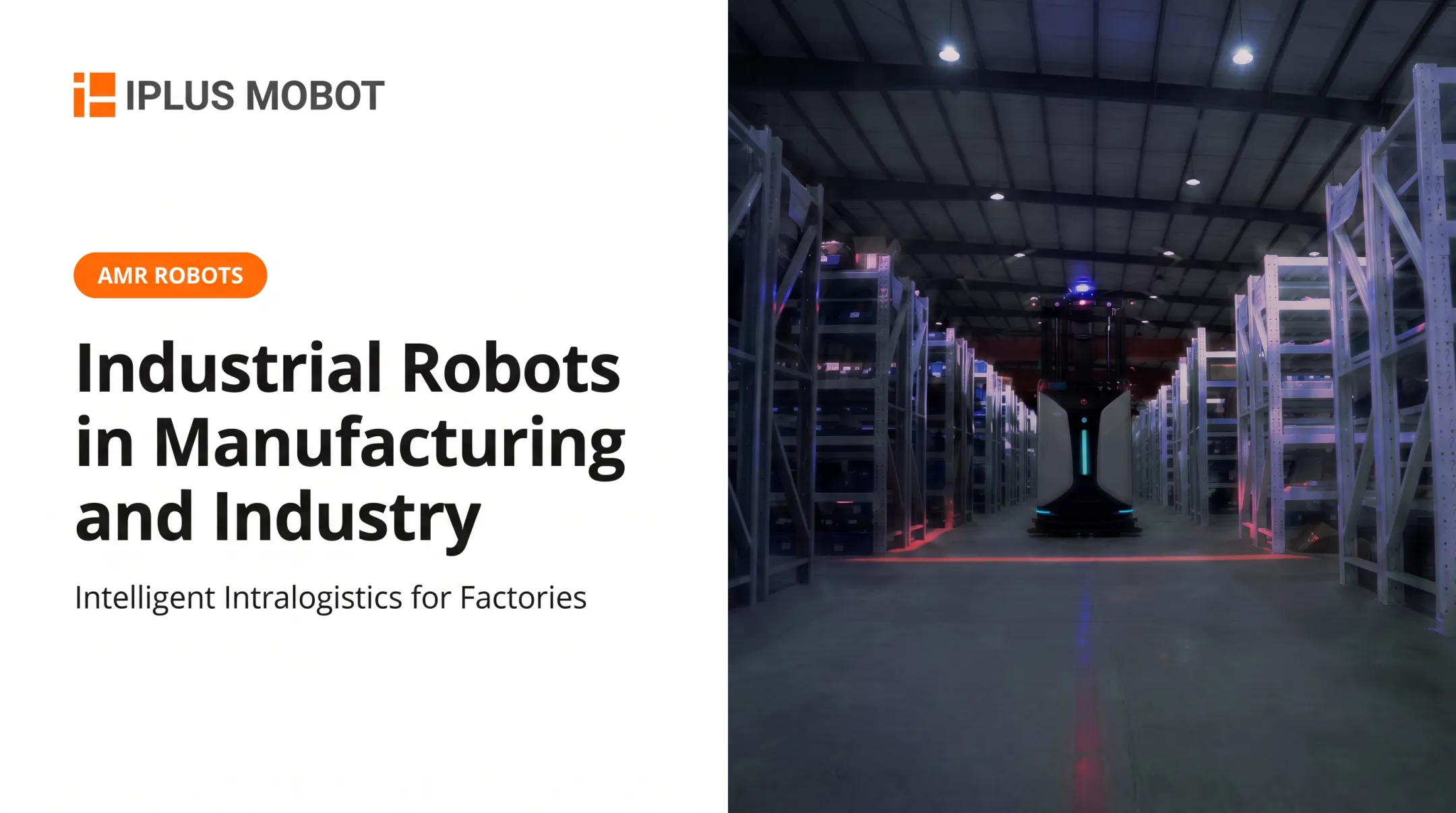
- Line-side delivery and inter-plant movement: Best suited to AMRs moving materials between stations or buildings.
Matching the Robot to the Environment
Site conditions quickly narrow the field:
- Cleanrooms, dust, or moisture
- Fragile parts or heavy pallets
- Mixed SKUs and tight cycle times
- Shared work areas with people
Some models carry cleanroom ratings; Epson lists ISO Class 4 variants of the LS6-B. Those ratings are model-specific. Treat fixed manipulation and mobile transport as separate selection decisions.
Should You Choose an Industrial Robot or a Cobot?
When an Industrial Robot Fits Better
Choose a industrial robot for high-throughput, high-payload, fast, repetitive work in a stable layout with limited human access. Expect guarding, dedicated floor space, professional programming, and heavier integration.
When a Cobot Fits Better
Cobots suit lower volumes, frequent changeovers, constrained footprints, and cells where operators interact with the process. Collaborative operation still needs application-specific safety validation. It does not automatically remove guarding.
Decision Criteria
Rank these against your real process:
- Payload and reach
- Cycle time and accuracy
- Product variation and SKU count
- Part presentation
- Floor space and mobility
- Operator interaction
- Integration complexity and expandability
US Safety and Compliance Planning
Start with these references, and confirm current editions:
- ANSI/A3 R15.06-2025, adapted from ISO 10218-1 and -2:2025
- ISO/TS 15066:2016 for collaborative operation
- OSHA 29 CFR 1910.212 (machine guarding) and 1910.147 (lockout/tagout)
- ANSI/A3 R15.08 for mobile robots
OSHA states there is no robotics-specific OSHA standard, and A3/RIA documents are guidance, not regulation. Your plan should still cover:
- Risk assessment
- Pinch and crush points
- Unexpected motion and end-effector hazards
- Speed and separation
- Emergency stops
- Validation, training, and written procedures

This is not legal advice.
How Much Does a Pick-and-Place Robot Cost?
No authoritative current U.S. price range exists for the arm alone, a work cell, or a full deployment. Quote comparisons should state which scope they cover. Price depends on:
- Robot type, payload, and reach
- Vision and gripper
- Conveyors and fixtures
- Guarding and controls
- Software and integration
- Commissioning, training, and maintenance
- Facility changes
Compare total system cost, not the arm price.
Evaluating ROI and Total Cost of Ownership
A3's ROI calculator compares manual labor against system ownership over 20 years. Inputs include purchase cost, maintenance, electricity, workers, shifts, and labor rate. Its 5% maintenance figure is an assumption, not a benchmark.
Factor throughput, scrap reduction, uptime, changeover time, and training into the model as well.
Reported results are supplier claims. APT Manufacturing reports $1.74 saved per part and 33 weeks to ROI. Magneti Marelli reports ROI within a year. Use them as illustrations, not forecasts.
How to Plan a Pick-and-Place Deployment
Start With a Feasibility Assessment
Document:
- Part dimensions, materials, and weight range
- Presentation method and pick/place locations
- Required cycle time and SKU variation
- Shift pattern and operator interaction
- Environment and existing equipment interfaces
Test representative parts and edge cases first.
Validate the Cell Before Scaling
Pilot these elements before you scale:
- Vision and lighting
- Gripper reliability and collision avoidance
- Placement accuracy and safety functions
- Controls, maintenance access, and operator training
Set measurable acceptance criteria. Motion Controls Robotics describes a factory acceptance test that runs at least 50 consecutive parts per station without a reject, then repeats at the customer site.
Connect Fixed Automation With Mobile Intralogistics
Fixed cells pick and place. Something still has to move parts, WIP, pallets, and supplies between cells, storage, and production. Forvia reports 14 MiR robots at one site handling pallets and components for assembly lines.

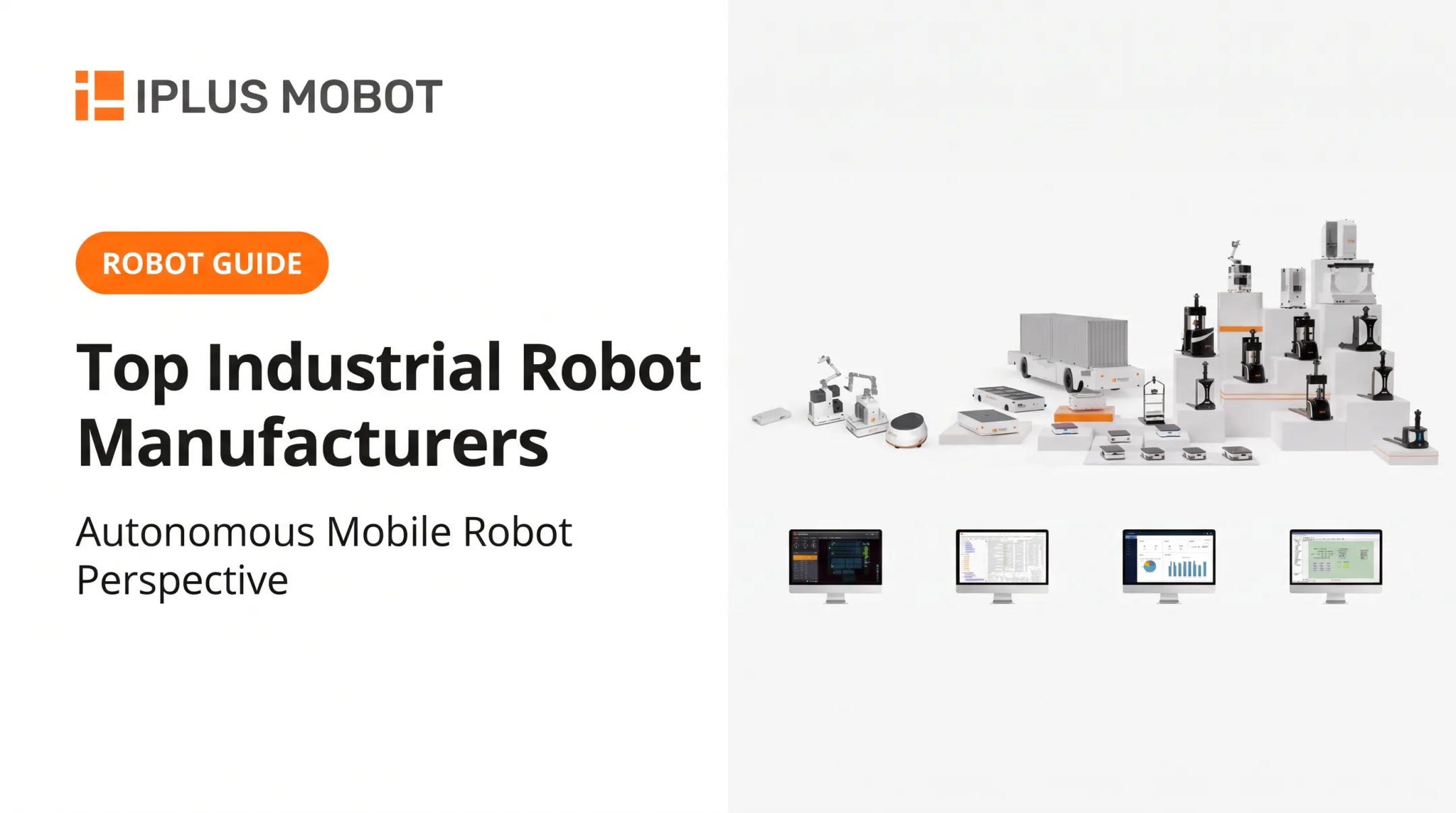
IPLUSMOBOT builds AMRs for this role, including MORA cobot AMRs, a self-developed mobile robotics platform, and CLOUDIA fleet software. Evaluate them for mobile material flow alongside your fixed equipment. A mobile base does not replace a fixed picking arm.
Choose the architecture that fits the whole workflow: presentation, picking, transport, placement, reporting, and replenishment. Qualified U.S. manufacturers and automation integrators can discuss an application with IPLUSMOBOT at sales@iplusmobot.com.
Frequently Asked Questions
What is a pick and place robot?
It is an automated system that picks an object, moves it, and places it at a target. Common components are an arm, end effector, controller, vision system, and conveyor or feeder.
How much does a pick and place robot cost?
Cost depends on the robot, payload, vision, gripper, guarding, integration, software, and commissioning. Assess total system cost rather than the arm price alone.
What is the difference between a pick and place robot and a cobot?
Conventional industrial robots favor speed and payload in guarded cells. Collaborative arms favor flexibility, easier programming, and human interaction, with different safeguarding.
Are cobots safe for pick and place applications?
They include collaborative safety features, but each application still needs a risk assessment, validated safety functions, suitable tooling, and compliance with applicable U.S. requirements.
How do I choose the right gripper and vision system?
Match vision to part presentation and orientation. Match the gripper to surface, shape, weight, fragility, and porosity, and test real parts.
Are pick and place robots suitable for small or changing production runs?
Cobots, flexible tooling, vision, and mobile automation can fit variable production. The business case depends on changeover time, part mix, throughput, integration effort, and total cost.