Singapore ranks second globally, at 873 industrial robots per 10,000 employees, according to the IFR. That figure covers industrial robots overall, not AMRs specifically, but it shows how ready local industry is for automation.
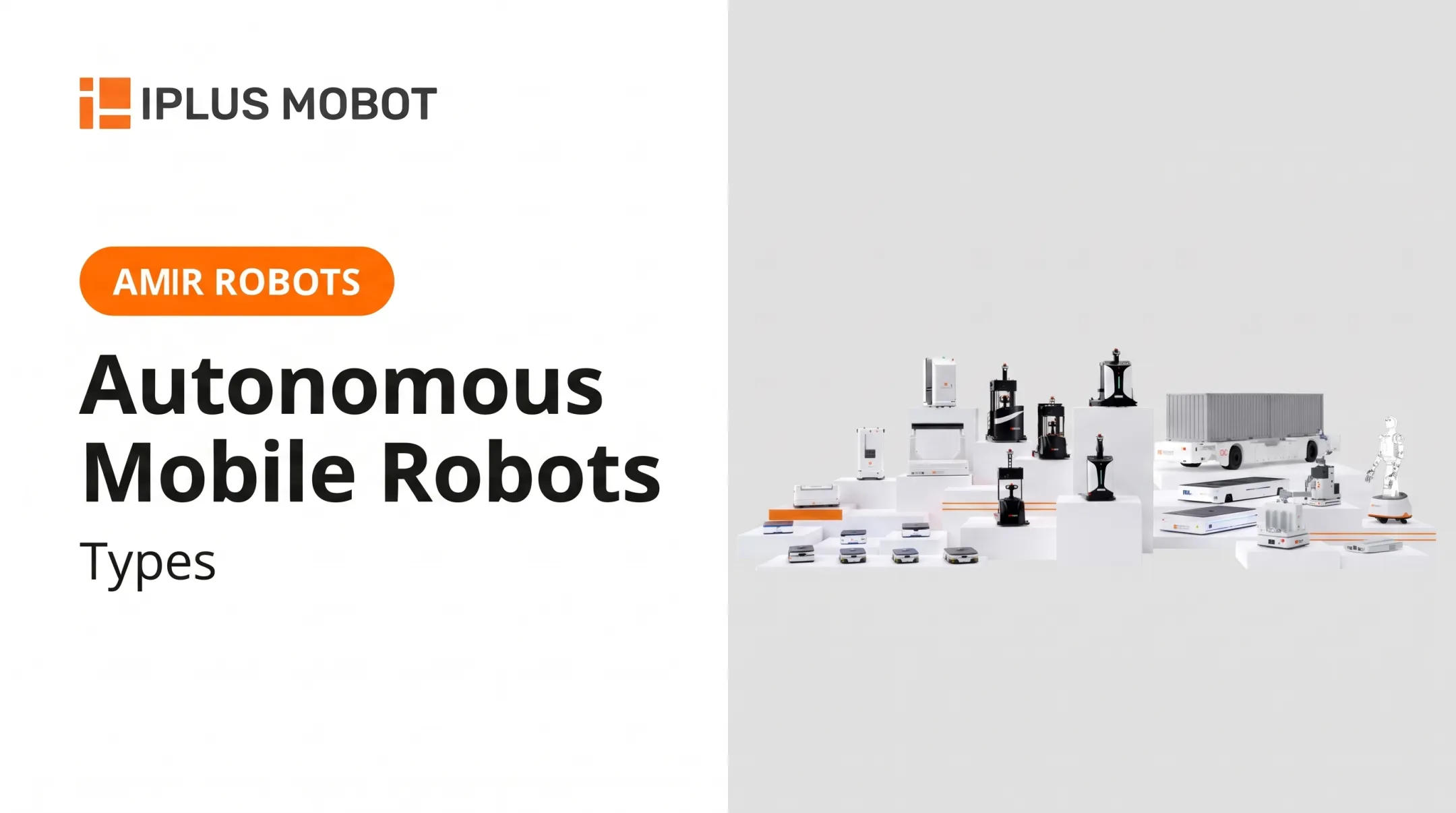
Autonomous mobile robots (AMRs) move materials using onboard sensors, mapping, software and fleet coordination. This guide covers applications, AMR versus AGV differences, implementation, safety and local adoption factors.
Key Takeaways
- AMRs navigate dynamically and take tasks from software; AGVs generally rely on fixed routes or infrastructure.
- Strong local use cases include line-side delivery, WIP movement, pallet transport, goods-to-person, and controlled outdoor transport.
- Success depends on process fit, payload, layout, integration, safety validation and workforce readiness, not spec sheets alone.
- Start with a measurable pilot and a scale-up plan.
What Are Autonomous Mobile Robots in Singapore?
How AMRs navigate and operate
An AMR combines a mobile base, sensors (LiDAR, cameras), localisation and mapping software, obstacle detection, task logic, a charging system and a fleet platform. SLAM-based robots build a map of the site and locate themselves on it, so they don't need guide wires or tape.
In operation, the robot receives a task, plans a route, steers around people and pallets, and calls for human help when it hits an exception. Specs and behaviours vary by model, so check the documentation for the robot you are evaluating.
Fleet software ties it together. Per IMDA's AMR Playbook, it handles:
- Task assignment and exception management
- Traffic coordination between robots
- Robot health and battery monitoring
- Integration with warehouse or production systems
- Operational data for supervisors
IPLUSMOBOT's CLOUDIA platform, for example, takes tasks from WMS and MES systems, controls traffic and issues remote anomaly alerts.
AMR versus AGV
| Dimension | AGV | AMR |
|---|---|---|
| Navigation | Wires, magnetic tape, markers, floor codes | Onboard sensing and map-based planning |
| Infrastructure | Guide-path installation | Mapping and site validation |
| Obstacles | Typically stops and waits | Can re-plan around them |
| Route changes | May need guide-path rework | Software changes, plus validation |
| Best fit | Stable, repetitive flows | Variable routes, people and vehicles sharing space |
| People interaction | Usually clear paths | Designed for shared areas, with safety functions |
Terminology overlaps between sources, and these tendencies come largely from vendor comparisons such as KUKA's. They are not hard rules.
AGVs can still be the right answer for highly repetitive routes in a stable layout. AMRs fit better where routes, SKUs, workstations or traffic change.
Base the choice on process requirements, total cost of ownership, site conditions and the flexibility you need. Neither technology is universally better.

AMRs versus autonomous vehicles
A private-site AMR is not a road vehicle. LTA states that AMRs and AVs on public paths are treated as motor vehicles and need a Ministerial exemption under the Active Mobility Act. Those on non-public paths fall outside that Act.
Road AVs run under separate Road Traffic Act rules and a trial-based sandbox. Announced pilots in Punggol and Sentosa are passenger services, not industrial AMR deployments.
Treat those schedules as announced plans, not confirmed operations. A robot moving pallets between workshops inside a campus faces a different environment, regulatory regime and public exposure entirely.
Where AMRs Create Value in Singapore Operations
Manufacturing and line-side intralogistics
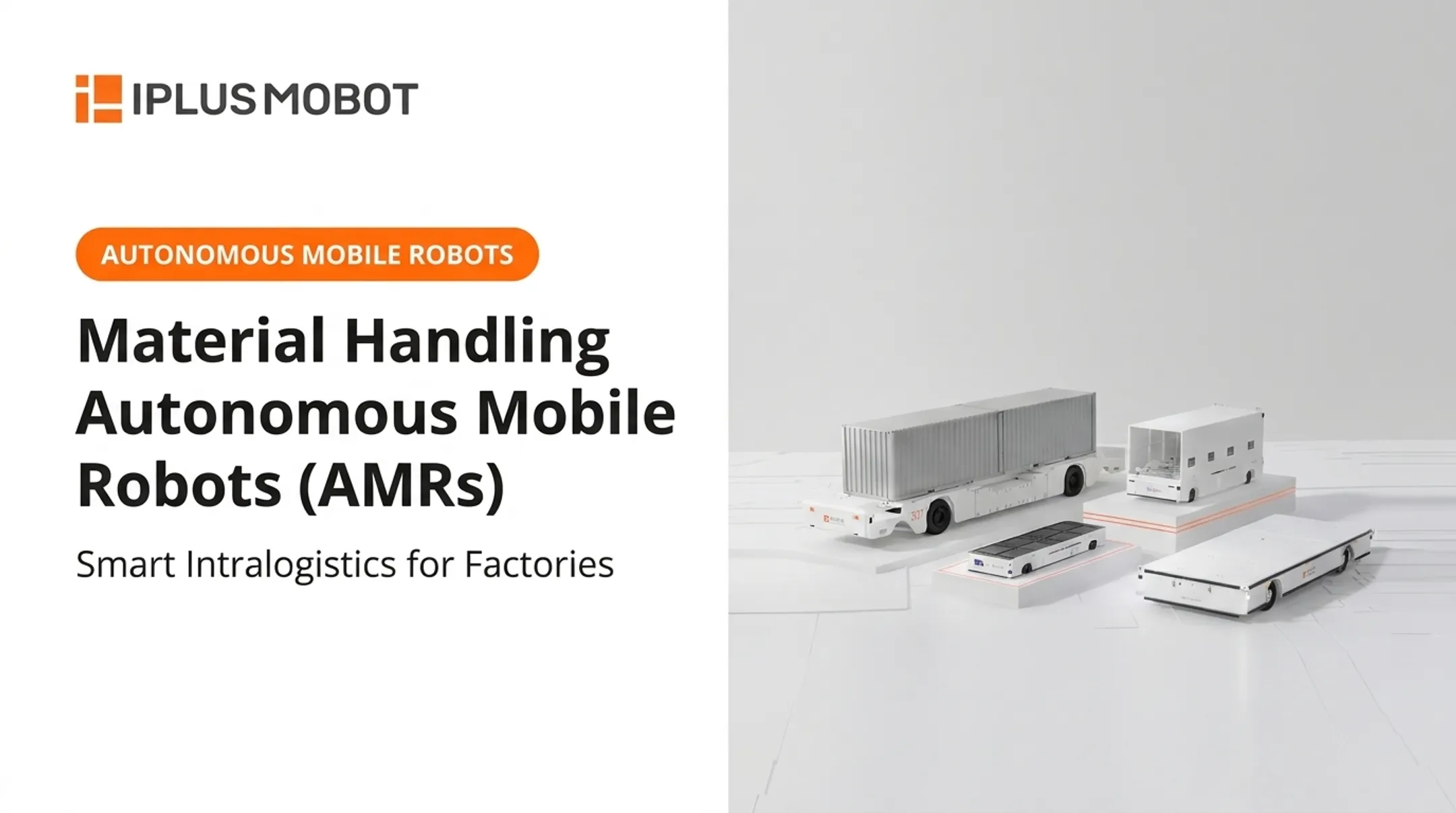
AMRs deliver components, bins, pallets, tools and WIP between receiving, storage, staging and production lines. Relevant sectors include electronics, SMT/PCBA, display, automotive, EV and battery manufacturing.
Manufacturing sites add specific demands:
- Precise delivery points at workstations (some platforms specify ±2 mm docking accuracy)
- Integration with production systems and takt schedules
- Contamination control in cleanroom areas
- Narrow aisles shared with pedestrians
One example is an SMT/PCBA AMR that transfers material racks between lines and adapts to varying line heights with adjustable rollers. IPLUSMOBOT documents an LCD clean-workshop deployment of more than 100 AMRs serving nearly 5,000 operation platforms. That is a vendor-reported case, not a Singapore installation.
Warehouses and 3PL distribution centres
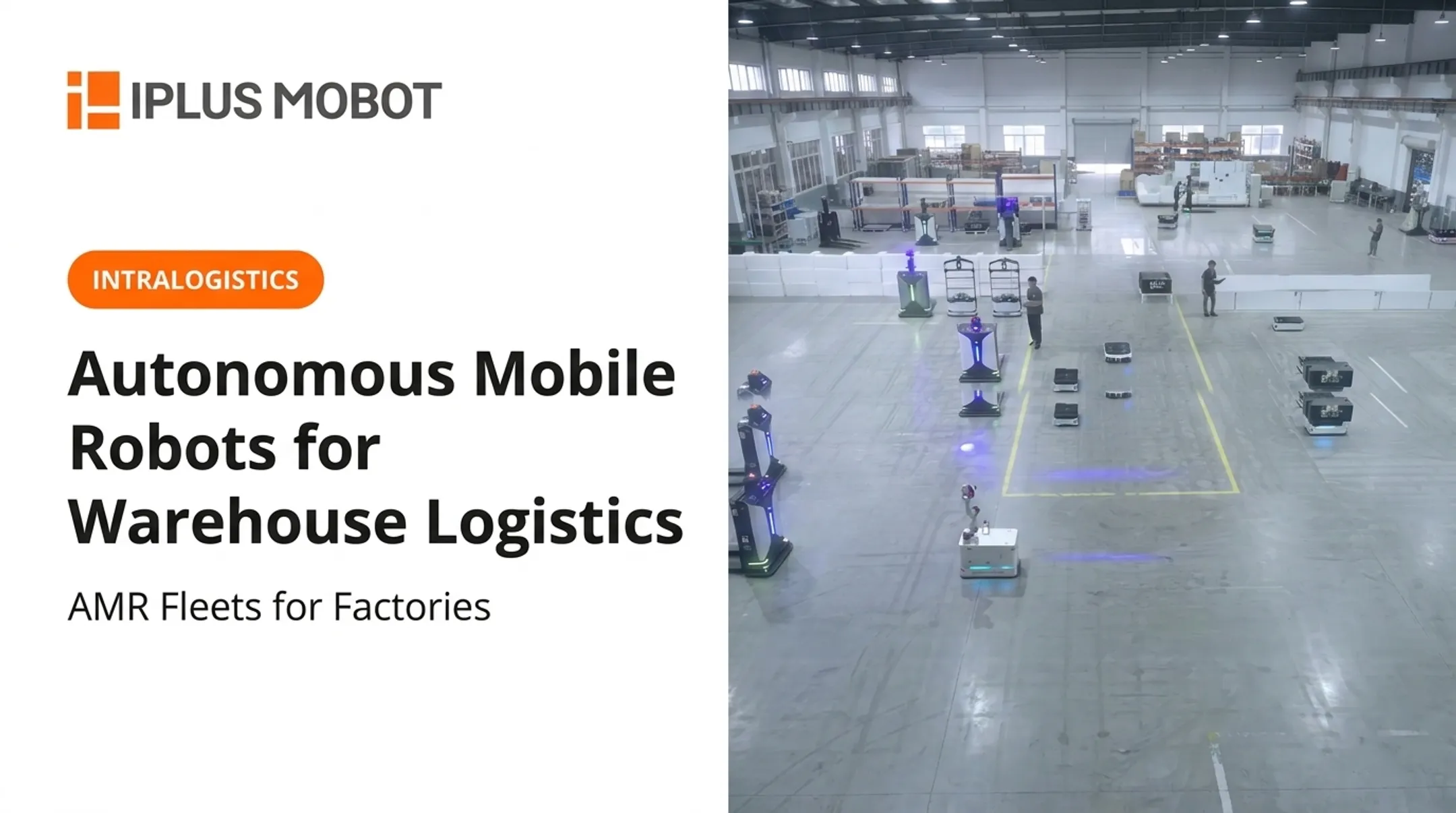
Warehouse uses include goods-to-person transport, tote and cart movement, pallet handling, put-away, replenishment, inbound staging, returns and transfers to packing and despatch. The main gain is less non-value-adding walking and steadier flow.
Quantified results should be read carefully. Lenovo reports 40% faster order processing for Singapore-based ST Logistics, but the case names no specific facility. ForwardX reports 43% lower labour cost at an SF-DHL site in Beijing. Both are supplier claims, not independent benchmarks. Treat them as hypotheses to test in your own pilot.
Outdoor yards and inter-plant transport
Heavy manufacturing and new-energy campuses often move loads between workshops, yards and warehouses outdoors. Outdoor platforms such as IPLUSMOBOT's LUNA are rated at 5 km/h and designed for container transfer and conveyor docking.
Evaluate these before committing:
- Surface condition, drainage and lighting
- Rain and weather exposure
- Localisation (GPS/RTK or alternatives) and geofencing
- Connectivity across the site
- Site crossings and load security
- Interaction with manually driven vehicles
Human-robot collaboration
AMRs take over repetitive transport and walking. People keep picking decisions, quality checks, exception handling, maintenance and safety interventions.
This is a role change, not an automatic replacement. Operators need training in recovery procedures and supervision. A*STAR SIMTech's SkillsFuture programme, for example, runs a 42-hour robotics-for-manufacturing course that includes robot safety and mobile-robot navigation.
Prioritising the first use case
Score each candidate workflow on:
- Task repetition and route stability
- Travel distance and payload
- Traffic complexity
- Cost of errors and labour intensity
- Operational criticality
- Availability of digital process data
Rank by expected value against implementation difficulty. Then pick a contained workflow with a clear baseline and defined success criteria.

How to Choose and Implement an AMR Deployment
Establish the baseline and business case
Collect data before talking to vendors:
- Transport cycles and travel distance
- Shift patterns and waiting time
- Manual handling and error rates
- Downtime and labour allocation
- Safety incidents and current equipment costs
IMDA's playbook lists total cost categories including hardware, integration and training, and flags Wi-Fi coverage and middleware interoperability as risks. Add site preparation, charging, maintenance, support and downtime during rollout.
On funding, Enterprise Singapore's EDGE Grant is the current route for new projects from 30 September 2026, with up to S$100,000 in total annual support. Support levels vary by activity, so confirm with Enterprise Singapore whether your AMR project qualifies. EDG and PSG closed to new applications on 29 September 2026.
Specify robot and site requirements
- Load and geometry: payload, load dimensions, footprint, turning radius, aisle width, doorways and lift access.
- Floor and environment: floor condition, ramps, gaps, temperature, exposure and cleanroom needs. OMNI-series specifications, for instance, cap gap tolerance at 35 mm and floor elevation difference at 10 mm.
- Power: battery capacity, opportunity or automatic charging, shift length and redundancy for robots out of service.
- Robot type: match forklift AMRs, omnidirectional platforms, mobile manipulators and outdoor vehicles to the material, route, terrain and handoff, not to a product name.
Plan software and systems integration
Confirm integration with WMS, MES, ERP, conveyors, lifts, docks and access control. IPLUSMOBOT's CLOUDIA connects to WMS, MES and ERP through APIs, and one battery-plant deployment included elevator integration.
Evaluate:
- APIs and task orchestration
- Traffic management and user permissions
- Dashboards, event logs and data ownership
- Cybersecurity and network resilience
- Fallback procedures when a connected system goes down
Good fleet software gives visibility into queues, robot status, battery levels, exceptions and performance reports. CSA's OT Cybersecurity Masterplan 2024 is the general reference for operational technology, though it is not AMR-specific. If cameras or microphones capture identifiable workers, check PDPC's workplace monitoring guidance.
Validate safety and human-robot interaction
Start with a site-specific risk assessment covering:
- Emergency stops and protective fields
- Speed management and warning signals
- Pedestrian and forklift interaction
- Manual recovery and load stability
- Safe handoff points
ISO 3691-4:2023 covers driverless industrial trucks, including AMR types, and ANSI/A3 R15.08 addresses industrial mobile robots. Confirm with MOM whether either counts as a statutory approval; the public machinery page does not name AMRs as a dedicated category. General WSH duties still apply. Get professional validation before treating any standard as sufficient.
Plan commissioning tests, acceptance criteria, operator training, incident reporting and reassessment whenever layout or workflow changes. If you charge many lithium-ion batteries, check SCDF/MHA's January 2026 workplace fire-safety advisory.

Pilot, measure and scale
Run a staged pilot in a representative but controlled workflow, with a fallback process. Name owners for operations, IT, safety, maintenance and the implementation partner.
Track:
- Completed transport cycles and task time
- Robot utilisation and intervention frequency
- Charging availability and downtime
- Delivery accuracy and near misses
- Workforce acceptance
Use results to size the fleet, adjust routes and workstations, and decide on expansion. Integrator accounts describe starting with one or two vehicles, with detailed process evaluation sometimes taking 6 to 18 months.

Vendor and solution fit
IPLUSMOBOT is a China-based manufacturer with a self-developed mobile robotics platform, CLOUDIA fleet software, and industrial, forklift, omnidirectional and cobot AMRs. It supports both standalone workflows and plant-wide deployments, and it established a Singapore subsidiary in 2025. Review current product and certification documents for ISO 9001 and CE, and confirm local service arrangements directly before assuming coverage.
Singapore Market Context, Support and Implementation Risks
Singapore's robotics ecosystem and adoption support
Singapore's robotics ecosystem includes A*STAR's ARTC (autonomous systems, mobile manipulation and fleet management), the National Robotics Programme running since 2016, and NUS's Advanced Robotics Centre.
IMDA's 2026 public-space robotics testbed names Certis, DHL, Grab and QuikBot, though it targets public areas, not private industrial sites. IMDA's 2025 initiative also targeted AMR integration with building systems and lifts for 500 local enterprises.
None of these programmes is a direct AMR purchase grant. Verify eligibility on each programme on its own terms, and confirm any market-size or adoption figures before you plan around them.
Safety, compliance and operating environment
Work through these with the right parties before deployment:
- Workplace safety duties under the WSH Act
- Building and facility permissions
- Equipment certification and site rules
- Data and cybersecurity responsibilities
- Public-path restrictions for outdoor or cross-site routes
Involve safety professionals, integrators, facility operators and relevant authorities, especially where robots meet pedestrians, forklifts, public areas, hazardous materials or multiple buildings.
Common implementation risks
A 2023 FMEA study flagged integration into production as a major challenge, listing Wi-Fi failures, lift and door communication and collisions with workers as risks. The common failure points and their fixes:
| Risk | Mitigation |
|---|---|
| Poor process selection | Score candidates, pilot the best one |
| Incomplete site survey | Detailed assessment, edge-case testing |
| Weak network or WMS/MES integration | Coverage mapping, integration testing |
| Mixed traffic, unclear responsibilities | Define ownership, train operators |
| Thin spares and maintenance | Set service-level expectations upfront |
| Overreliance on demos | Test on your site and review post-launch |
Integrators note that deployment isn't off-the-shelf: site visits, measurement, H&S checks, workflow analysis and mapping still come first.

Conclusion
AMRs can make material flow in Singapore's warehouses, factories and selected outdoor sites more flexible and data-driven. The value comes from matching robot and software architecture to a clearly defined operational problem.
Begin with a workflow assessment and a measured pilot. Then consult a qualified AMR manufacturer or integrator for site-specific feasibility, safety, integration and scale-up planning.
Frequently Asked Questions
Is Singapore good for robotics?
Singapore ranks second in industrial robot density (IFR) and fifth in WIPO's 2026 Global Innovation Index, with strong research and manufacturing demand. Verify current funding, infrastructure and regulations for your specific deployment.
Does Singapore have autonomous vehicles?
Public-road AVs operate only under LTA's 2017 trial framework, and the Government is studying a new AV Act. Controlled-site AMRs are a different category. Punggol and Sentosa services are announced pilots, not confirmed operations.
What is an autonomous mobile robot (AMR)?
An AMR navigates by itself using sensors and maps, avoids obstacles, and takes tasks from software. It is common in warehouse and manufacturing material transport.
How is an AMR different from an AGV?
AMRs navigate dynamically through software; AGVs generally follow fixed routes or infrastructure. AGVs can still suit stable, repetitive transport.
Are AMRs suitable for Singapore warehouses and factories?
Yes, for warehouse, 3PL, electronics, automotive, EV and general manufacturing uses. Fit depends on payload, layout, traffic, integration, safety and the process itself.
How should a business evaluate an AMR deployment in Singapore?
Run a baseline process study, a total-cost assessment, and site, safety and integration reviews. Then pilot with measurable KPIs, train staff and set a scale-up plan.