Buyers who budget for the arm alone get surprised. Tooling, fixtures, safety review, programming, installation, and training all land on top. Payload, reach, application, environment, and support needs move the total further.
This guide compares pricing examples, explains the main cost drivers, breaks down total cost of ownership, and shows how to build a realistic budget before you request quotes.
Key Takeaways
- Arm-only prices run roughly $25,000-$60,000; deployed systems often cost about double.
- Tooling, sensors, integration, safety assessment, and training add real cost.
- Low-cost cobots suit light, low-risk tasks; demanding jobs justify higher spend.
- Compare quotes on reliability, support, and lifetime value, not price alone.
How Much Does a Cobot Cost? (Pricing Overview)
There is no single cobot price. Any figure you read needs a label: scope, date, market, currency, and whether it covers the arm or a full installation. All figures below are USD.
Misread pricing causes two common failures:
- Budgeting for the arm, then discovering the end-of-arm tooling, fixture, safety review, programming, and commissioning are extra.
- Buying on purchase price alone, then finding that the payload, reach, speed, or software can't handle the job.
No standardized, sourced US price bands exist for entry, mid, and advanced cobots. The tiers below use welding and application-package examples from vendors. Treat them as illustrations, not universal tiers.
Entry-Level or Basic Cobot Setup
At the arm level, EVS International estimates $25,000-$60,000 for the arm only. For a basic cobot-welding system, ABICOR BINZEL USA estimated $52,000-$70,000 in 2025. Confirm with the supplier whether the controller, pendant, tooling, installation, and warranty are included; the article does not itemize them.
This tier fits simple pick-and-place, inspection, screwdriving, light assembly, and proof-of-concept work with predictable parts and modest integration.
Mid-Range or Standard Cobot System
ABICOR BINZEL put more complex or higher-volume welding at $80,000-$110,000, and says that tier includes integration, training, support, and maintenance agreements. Hirebotics lists ready-to-run application packages on its published pricing page:
- Cobot Cutter: from $100,000
- Cobot Welder: from $105,000
- Cobot Painter: from $140,000
Each bundle includes the robot, application equipment, a hand-teaching tool, and software. Machine tending, material handling, assembly, packaging, and recurring-production welding typically land in this tier.

Advanced or High-End Cobot Deployment
Advanced deployments rarely carry published list prices. Expect costs to climb when you add:
- Higher payload or reach
- Vision, force sensing, or precision control
- Cleanroom compatibility
- Multiple tools, conveyor or machine interfaces, and MES connectivity
- Specialized safety equipment and service contracts
Request these line by line in the quote.
What Published Ranges Include and Exclude
Know which scope a number describes:
- Arm only: the robot, sometimes without controller or pendant.
- Component level: individual grippers, scanners, sensors.
- Complete cell: arm, tooling, fixtures, safety, programming.
- Turnkey project: the full cell, installed, validated, and trained.
Common exclusions include taxes, freight, site preparation, production downtime, custom fixtures, and recurring software or service fees.
Key Factors That Affect Cobot Cost
Technical, operational, and commercial factors decide whether you need a basic cobot, an integrated workcell, or a mobile solution.
Type, Configuration, and Application
Welding, cutting, painting, machine tending, inspection, and palletizing each need different tooling and safety work. Published price points are more common for welding, cutting, and painting, so don't assume a machine-tending cell costs the same.
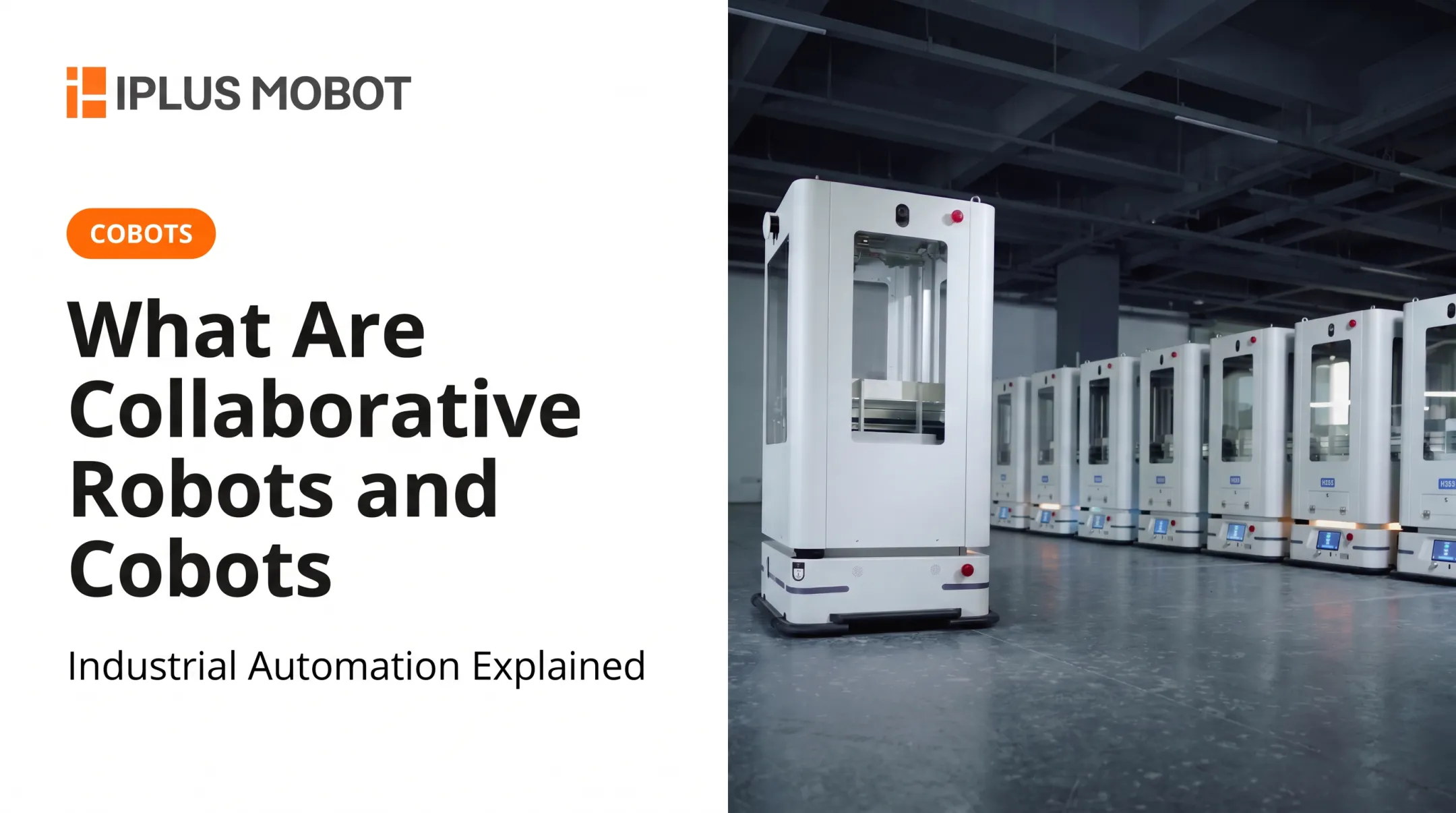
Fixed arms differ from mobile cobot AMRs used for line-side delivery. IPLUSMOBOT's MORA cobot AMR line is one example: a different category that needs an application-based quote, not an arm-price comparison.
Payload, Reach, Speed, and Precision
Payload must cover the workpiece plus the end-of-arm tooling. Manufacturer specs show the range:
| Model | Payload | Reach |
|---|---|---|
| ABB GoFa 5 | 5 kg | 0.95 m wrist |
| FANUC CRX-10 | 10 kg | 1,249 mm |
| FANUC CRX-20 | 20 kg | 1,418 mm |
| Universal Robots UR20 | 20 kg | 1,750 mm |
Suppliers rarely publish a separate dollar premium for higher payload or reach. Oversizing wastes capital; undersizing causes cycle-time, reach, and reliability problems. Match the spec to the task, then ask suppliers to price it.
Operating Environment, Safety, and Compliance
Cleanrooms, dust, moisture, temperature extremes, and food or pharmaceutical settings can raise costs. Cleanroom, IP-rated, and food-grade versions rarely list a reliable numeric premium, so budget for an application-specific quote.
A cobot is not automatically safe. A3 cautions that collaborative robots are not inherently safe, so a documented risk assessment is needed. Scanners, light curtains, or guarding may still be required.
For scale, one retailer listed a SICK S3000 scanner at $3,899 and a SICK C2000 light curtain at $4,177. Those are single listings, not installed costs.
Standards are also moving: ISO 10218-1 and -2 were updated in 2025, and ANSI/A3 R15.06-2025 adopts them in the US.
Customization, Tooling, and Integration Complexity
Robotiq lists its Hand-E gripper at $4,725 MSRP and the Hand-E C-10 at $5,700. Vision, force-torque sensors, tool changers, positioners, fixtures, conveyors, and software integration add more. These add-ons and integration labor lack stable public price ranges, so avoid generic markups and request itemized quotes.

An off-the-shelf application kit costs less than a custom cell built around variable parts, frequent changeovers, or several processes.
Deployment Scale, Support, and Lifecycle Requirements
Single units, multi-cobot rollouts, and plant-wide integration are priced differently. Training, spares, warranty terms, response times, software updates, and service contracts all shape the offer. Compare five-year ownership, not just purchase price.
Cobot Cost Breakdown and Low-Cost vs. High-Cost Options
Total investment extends well beyond the arm. Budget for the whole deployment.
| Cost category | Type | What it covers |
|---|---|---|
| Cobot and controller | One-time | Arm, controller, pendant, cables, base software, warranty. Verify what each supplier bundles. |
| Tooling, fixtures, sensors | One-time plus wear replacements | Grippers, vacuum, welding gear, cameras, force sensors, tool changers, stands, conveyors |
| Integration, safety, training | Mostly one-time | Cell design, programming, risk assessment, installation, commissioning, training, downtime |
| Operating and maintenance | Recurring | Power, consumables, preventive maintenance, software support, replacement parts, extended warranty |
Power is a small line item. The UR20 draws up to 750 W, about 500 W on a moderate program. Maintenance, tooling wear, and downtime matter more.
Low-Cost vs. High-Cost Cobots
Price alone does not signal quality or fit. Match the cobot to the application.
Performance. Budget setups usually mean lower payload, shorter reach, slower speed, simpler sensing, and fewer software options. Higher-cost systems justify the premium when the work needs faster cycles, advanced sensing, or a larger work envelope.
Durability, support, and compliance. Before choosing a budget option, check warranty length, parts availability, technical support, software updates, certifications, and the operating environment. Stronger support infrastructure, compliance documentation, and service agreements lower operational risk.
Long-term value. Compare total cost of ownership, downtime exposure, redeployment potential, changeover needs, and upgrade paths. MANTEC's 2025 article estimates 12-24 month payback for cobot installations, including one case with 14-month payback and $73,000 in annual labor savings. That's one organization's reported estimate, not a benchmark.

How to Estimate the Right Cobot Budget
The right budget follows the process you're automating, the output you need, and lifetime cost, not the cheapest arm.
Factors to Consider
- Workload: task, part size and weight, tooling weight, work envelope, cycle-time target, required output.
- Operating pattern: shifts, utilization, product changes, changeover time, operator interaction.
- Quality and safety: repeatability, inspection, traceability, risk assessment, standards, environment, guarding.
- Infrastructure: floor space, power, compressed air, network, machine interfaces, operator skills, local integration resources.
- Lifecycle costs: energy, tooling wear, consumables, maintenance, software, service plans, spares, downtime, upgrades.

Requesting Comparable Quotes
Send every supplier the same application brief. Ask for line-item pricing on:
- Arm and controller
- Tooling, sensors, and fixtures
- Integration, installation, and safety work
- Training, freight, taxes, and warranty
- Recurring support
Also ask about commercial models. Some suppliers offer CapEx purchase, leasing, rental, or pay-per-use arrangements, and maintenance is bundled differently in each.
What Most People Miss
- Upfront price only. A bare-arm quote can't be compared with a turnkey cell.
- Operating costs. Consumables, service, spares, software, and downtime shift the ownership math.
- Over-specifying. Buy the payload, reach, and sensors your process needs, not the biggest model.
- Cheapest without reliability checks. Verify certifications, warranty, service response, spare parts, cybersecurity, software support, and the supplier's implementation experience.
Conclusion
Cobot cost depends on whether you're buying an arm, a packaged workcell, or a fully integrated project. Tooling, integration, safety, training, maintenance, and upgrades are what turn a $25,000-$60,000 arm into an $80,000-plus system.
Itemize those costs and you get a more accurate budget and quotes you can compare. For a US operation, the right investment delivers the performance, reliability, flexibility, compliance, and support that hold up over the full life of the system.
If your task is moving parts between stations rather than working at a fixed point, IPLUSMOBOT's mobile cobot AMRs (5 kg to 15 kg payload options) are worth an application-based quote.
Frequently Asked Questions
How much do cobots cost?
An arm alone runs roughly $25,000-$60,000, according to a 2026 EVS International guide. Complete deployed systems often cost about double, and published application packages start near $100,000.
Are there cheap cobots available?
Entry-level, used, refurbished, and imported units exist. Verify payload, support, certifications, warranty, software, parts availability, and total installed cost before buying.
What is a cobot vs. a robot?
A cobot is a robot designed with features that can support work near people; "robot" is the broader category. A risk assessment is still required for every cobot application.
How much does a complete cobot system cost?
A complete system adds tooling, fixtures, sensors, safety, programming, installation, commissioning, and training to the arm. Published examples run from about $52,000 to $140,000 depending on application.
What costs should I include beyond the cobot arm?
Include the controller, end-of-arm tooling, fixtures, vision, integration, safety assessment, installation, training, freight, maintenance, software, spare parts, and downtime.
Are used or refurbished cobots a good way to save money?
They can work for simple, well-understood tasks. Verify condition, remaining service life, warranty, software compatibility, safety compliance, parts availability, and integrator support.