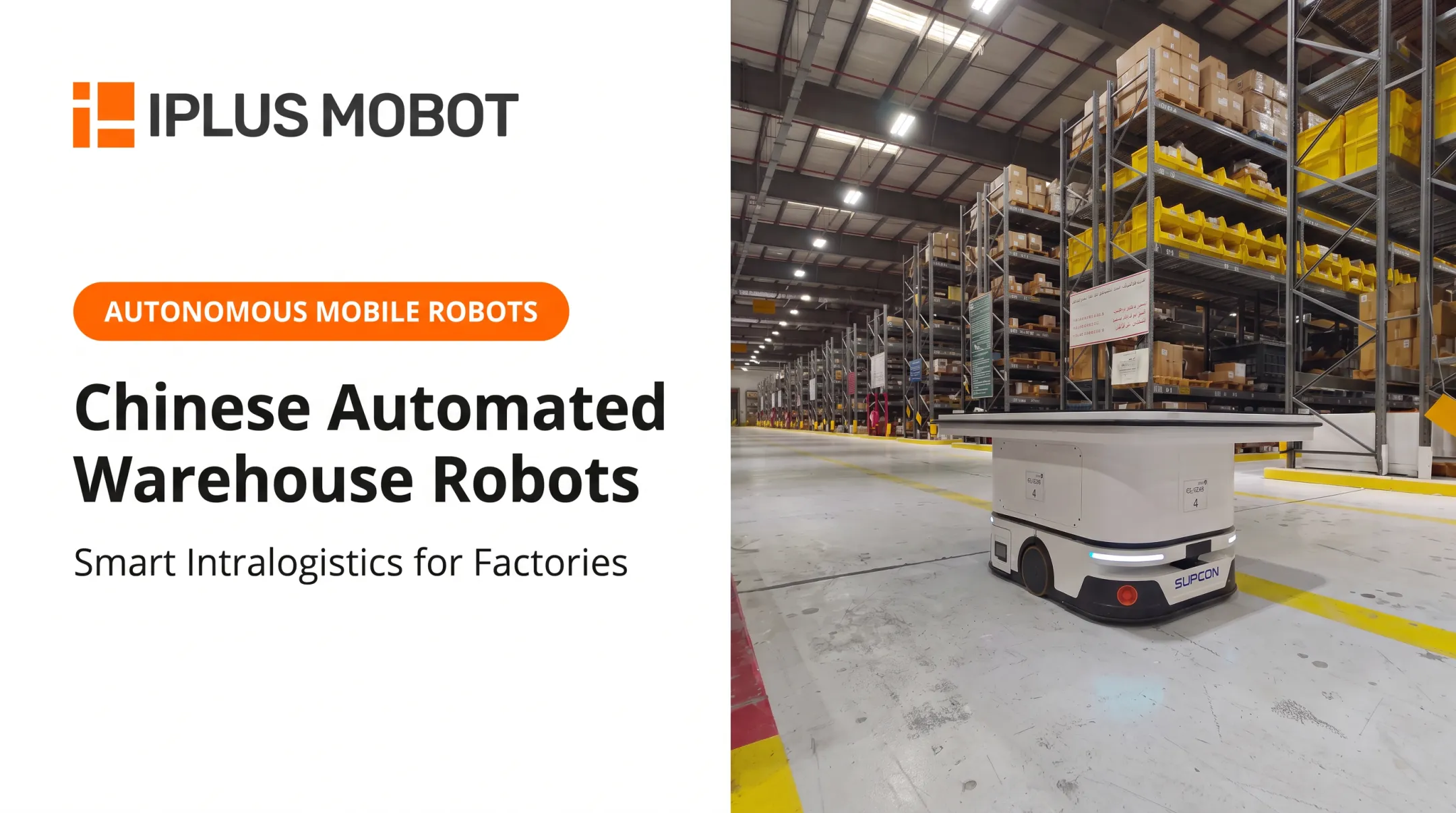
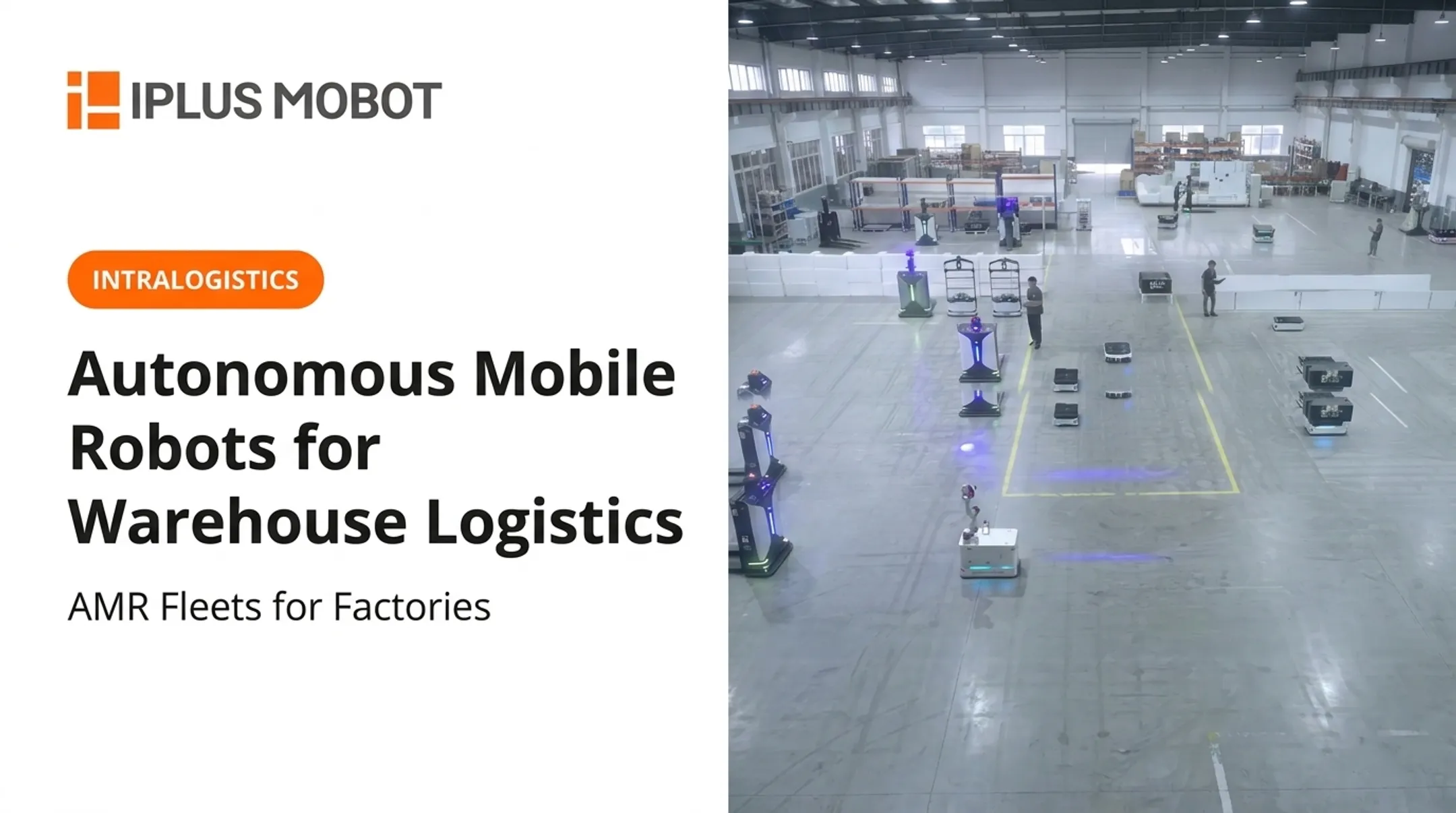
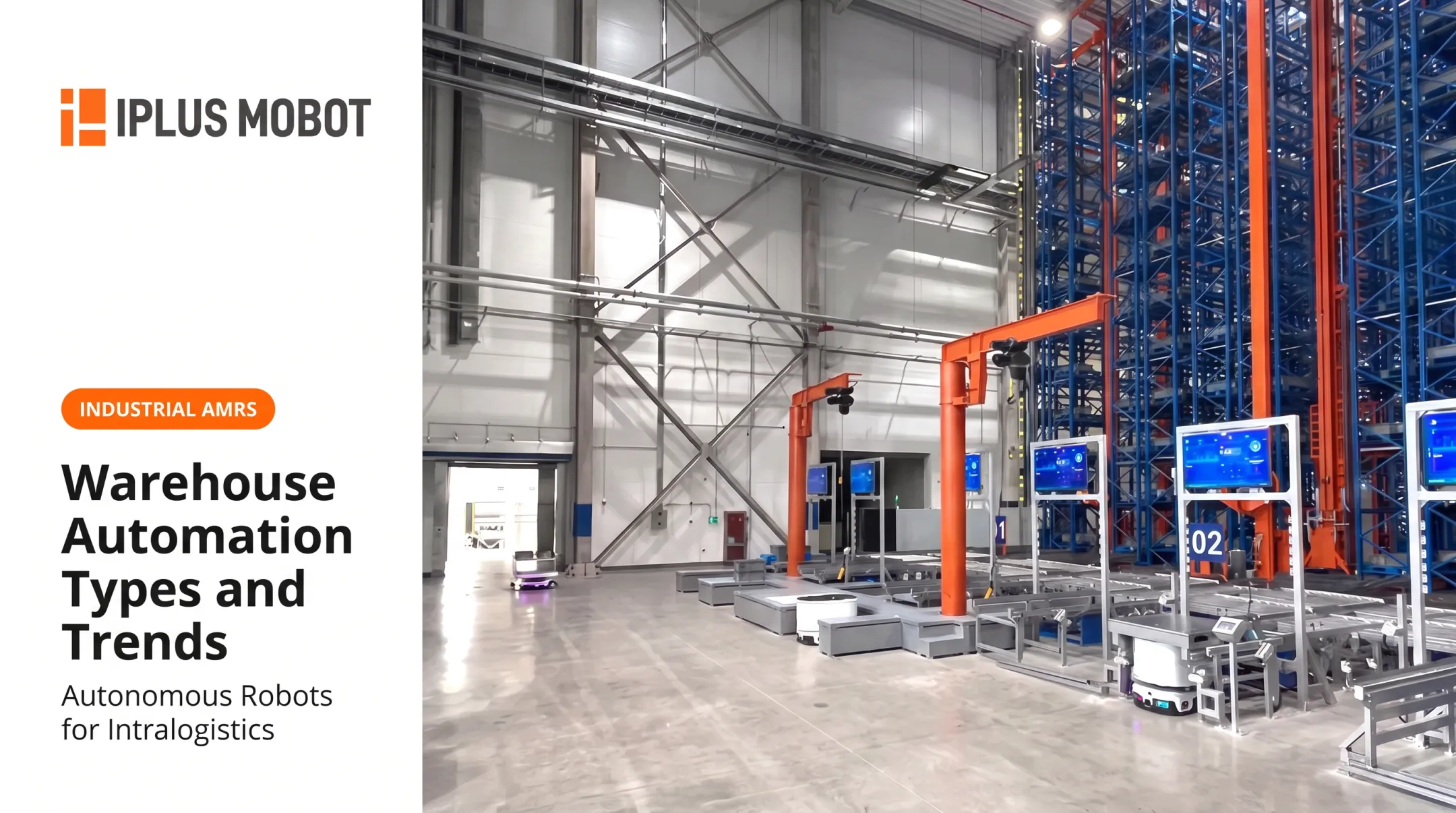
A note on terms: "automated stock robots" here means physical warehouse robots that move, locate, replenish, or verify inventory. It doesn't mean AI stock-trading bots or robotics stocks.
This guide covers robot types, workflows, applications, software integration, selection, implementation, and total cost of ownership.
Key Takeaways
- A transport robot moves stock; it doesn't automatically count it.
- Payload, aisle width, rack height, and layout decide the right robot type.
- WMS, ERP, MES, and fleet-software integration matters as much as hardware.
- Compare safety, service, scalability, and total cost, not purchase price alone.
What Are Automated Stock Robots for Warehouse Inventory?
Automated stock robots are mobile robotic systems that transport, position, replenish, retrieve, or verify inventory with limited manual intervention. They rely on sensors, navigation software, and a task-management system.
Moving stock and updating records are separate jobs. A robot can carry a pallet while a barcode, RFID, or computer-vision system confirms what it is and where it sits.
Unlike conveyors, shuttles, or robotic arms, mobile robots aren't tied to one fixed path. MHI describes AGVs and AMRs this way: AGVs follow predetermined routes, while AMRs use onboard computing to roam without fixed paths and reroute around obstacles.
Types of warehouse inventory robots
- AMRs: carry totes, carts, shelves, or pallets between receiving, storage, picking, replenishment, and shipping.
- Autonomous forklifts: handle putaway, retrieval, and heavier loads, including lifting pallets into racking. Choose them over smaller AMRs when the task involves rack height or loads beyond a platform robot's capacity.
- Scanning robots and drones: built for location verification and cycle counting, not transport. GXO reports a scanning robot covering heights up to 43 ft, though that's an operator-reported figure.
Automated versus autonomous
The terms get used loosely. A 2026 Springer review notes that terminology is inconsistent, so labels alone don't establish capability. In practice, autonomy ranges from operator-assisted missions and predefined routes to dynamic navigation and fully system-assigned tasks. Ask vendors which level a specific model delivers.
How Do Automated Stock Robots Work in a Warehouse?
The workflow is consistent across most systems:
- A task is created, usually by the WMS.
- The fleet manager assigns it to a robot.
- The robot navigates to the location.
- Inventory is moved or scanned.
- The transaction is verified.
- The result syncs back to the warehouse system.

Navigation, sensing, and task execution
Robots combine LiDAR, cameras, proximity sensors, mapping, and localization. ABB describes visual SLAM as pairing AI with 3D vision, and OMRON documents map-based localization using safety laser scanners. Sensor configurations differ by model, so verify the specifics for any named system.
Real warehouses are messy. Robots have to handle people, forklifts, temporary obstructions, relocated stock, and blocked aisles. Some stop and bypass obstacles; others wait or reroute through the fleet manager. Priority tasks can preempt routine ones.
Inventory identification and data capture
Barcode, RFID, computer vision, OCR, and weight sensors can all identify stock. Capabilities vary by robot and attachment, and published accuracy data is limited. A 2023 warehouse-drone study tested barcode counting on 303 boxes in a simulated warehouse; the accuracy rate for that test is unclear. Request model-specific results from vendors rather than assuming universal rates.
Robots can support receiving, putaway, replenishment, cycle counting, picking, staging, and shipping validation. Just separate movement confirmation ("the pallet reached bay 14") from item-level counting ("bay 14 holds 48 cases").
Software, systems, and exception handling
Several layers cooperate:
- WMS/ERP/MES: own inventory and orders.
- Fleet manager: assigns missions and controls traffic.
- Integration layer: passes task status, location, SKU, quantity, exception codes, and completion time.
Standards help at the robot level. VDA 5050 defines communication between mobile robots and fleet control, but it isn't a WMS/ERP/MES interface.
Exceptions will happen: an unreadable barcode, a missing pallet, a blocked aisle, a misplaced load. Good systems flag them for human review and use controlled recovery rather than guessing and posting a bad transaction.
Where Can Warehouse Inventory Robots Add Value?
High-volume warehouses and 3PLs
Robots cut repetitive travel in putaway, replenishment, pallet movement, and goods-to-person workflows. Published results vary by site:
- A 2025 study with 20 pickers and 2 AMRs found a 25% cut in order-cycle time and 60% less picker idle time.
- A grocery-warehouse pilot found a U-shaped relationship: adding more AGVs didn't keep improving picking time.
- Locus reports a 3PL gained 61% productivity after deployment (vendor-reported).
Treat these as study results, not guaranteed ROI.
Automotive, EV, and electronics manufacturing
Line-side delivery and work-in-process movement need consistent timing and traceability. IFR's lithium-battery factory case describes AMRs in mixed human and vehicle traffic, 1,301 mm aisles, and ±5 mm docking. In SMT/PCBA, AMRs move racks between lines and laser-marking steps.

IPLUSMOBOT's CRRC deployment is a comparable example: fleets ran 24/7 in a class-100 dust-free workshop with ±2 mm docking precision. That's a manufacturing case rather than an inventory-counting one.
Difficult site conditions
- Cold storage: Prime Robotics lists a cold-adapted AMR rated to -20°F.
- Cleanroom: KUKA reports ISO class 3 certification for one cleanroom AMR.
- High-bay and narrow aisle: these often need specialized forklift-type hardware. IPLUSMOBOT lists forklift AMRs for 70 cm channels at 400 kg.
- Outdoor and mixed-use: no general suitability rule exists; confirm per model and site.
How to Choose an Automated Stock Robot System
Choosing the right system starts with your facility, not a product brochure. Map these constraints before you shortlist vendors:
Warehouse assessment checklist:
- SKU and pallet profiles, dimensions, and weight
- Movement frequency and storage density
- Rack height and aisle width
- Floor conditions and temperature
- Traffic patterns and operating hours
Match the robot to the main problem
| Primary problem | Likely fit |
|---|---|
| Flexible, changing transport | AMRs |
| Pallet putaway and rack handling | Autonomous forklifts |
| Count and location verification | Scanning robots or drones |
| Stable, repetitive routes | Fixed automation |
Decide first whether you need material movement, cycle counting, location verification, picking assistance, or a mix. MHI advises weighing flexibility and future adaptation rather than shopping by the AGV/AMR label.
Compare performance requirements
Score each candidate on the factors that matter on your floor:
- Payload, speed, and battery runtime
- Maneuverability, navigation accuracy, and docking precision
- Charging method and rack compatibility
- Behavior around people and conventional forklifts
For reference, one forklift AMR spec lists 2,000 kg payload, ±10 mm pallet identification, ≥8 hours runtime, and ≤2 hours charging. Demand verified specifications, site references, and pilot results under your layout and loads, not generic marketing claims.

Evaluate software, integration, and vendor fit
Confirm compatibility and control before you commit:
- WMS, ERP, MES, API, and fleet-management interfaces
- Cybersecurity, reporting, remote monitoring, user permissions, and data ownership
- Documented interfaces, commissioning support, and training
- Spare parts, maintenance procedures, and a clear escalation path
IPLUSMOBOT is one example of a provider that combines AMRs, fleet software, and intralogistics services. Its CLOUDIA fleet manager integrates with WMS, MES, and ERP, and its OWL warehouse software covers receiving through shipping.
Forklift AMRs suit pallet putaway and retrieval; standard AMRs suit rack handling and transport. Those are movement workflows, and not every model performs inventory counting.
How to Plan Implementation, Integration, and ROI
Baseline before you deploy. Capture the metrics that matter most to your operation:
- Travel time and labor allocation
- Inventory discrepancies and replenishment delays
- Throughput, utilization, and downtime
- Safety incidents
For count accuracy, Descartes cites WERC's 2021 benchmark of 98% median and over 99.56% best-in-class. That figure is dated, so compare against your own history first.
Pilot and scale in stages
McKinsey recommends testing across SKU types and throughput requirements, then scaling after a pilot.
- Pick a representative zone.
- Define acceptance criteria.
- Test normal and exception workflows.
- Involve operators and integrators.
- Expand only after navigation, integration, safety, and service are proven.

Prepare the site before go-live:
- Mapping, floor and aisle readiness
- Charging locations and network coverage
- Traffic rules, pedestrian controls, and rack labeling
- Staging areas
Brownfield sites may need racks shifted to meet clearance requirements. No navigation technology works fully out of the box, so integrator involvement matters.
Integrate into daily operations
Validate transactions across the robot, fleet manager, WMS, and ERP or MES. Build in duplicate-task prevention, failed-transaction recovery, audit trails, and manual overrides.
Plan for training, preventive maintenance, software updates, battery management, spare parts, and monitoring.
On safety, OSHA states it has no specific robotics standards, but points to applicable requirements and consensus standards. Relevant ones include ANSI/A3 R15.08 (parts 1 to 3) for industrial mobile robots, ANSI/ITSDF B56.5, and ISO 3691-4.
For cybersecurity, NIST SP 800-82 and ISA/IEC 62443 offer general OT guidance.
Build a total-cost and ROI model
Include more than the quote:
- Hardware, software, and integration
- Site preparation and charging infrastructure
- Training, maintenance, support, and upgrades
- Downtime and staffing impacts
Then measure outcomes against the baseline:
- Labor hours redeployed
- Throughput and inventory accuracy
- Reduced travel and fewer handling errors
- Utilization, safety, and avoided expansion costs
No reliable universal price or payback range exists, so use project-specific proposals. Vendors publish TCO claims too (IPLUSMOBOT cites 25 to 40% lower TCO for its integrated software), so ask to see the basis.

Frequently Asked Questions
How much does an inventory robot cost?
Cost varies by robot type, payload, sensors, software, integration, site preparation, charging, and scale. Request a total-cost-of-ownership quote, not a hardware-only price.
What is the difference between an inventory robot and an AMR?
An AMR is one type of mobile robot. "Inventory robot" is broader and can include AMRs, autonomous forklifts, drones, and scanning systems.
Can warehouse robots count inventory?
Some camera-equipped systems scan barcodes, read labels, verify locations, or count cases. Transport robots often only move stock and confirm task completion.
Do inventory robots work with an existing warehouse management system?
Usually, through WMS, ERP, MES, API, and fleet-management interfaces. Confirm compatibility for your specific software versions and workflows.
Are automated stock robots suitable for small or existing warehouses?
It depends on layout, traffic, inventory profile, task volume, and integration readiness. Start with one focused workflow or pilot rather than a full-facility rollout.
What should I measure to determine whether a warehouse robot is worth the investment?
Track labor utilization, travel reduction, throughput, inventory accuracy, error rates, safety, uptime, and maintenance. Weigh them against complete implementation cost and scalability.